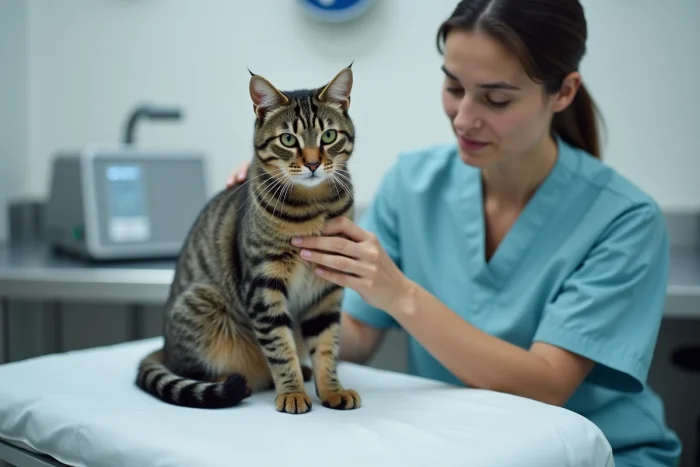
Clavaseptin P combines amoxicillin and clavulanic acid in a bisectable tablet flavored with pork liver. In cats, this veterinary medication targets infections caused by sensitive bacteria, including beta-lactamase producing strains. Its use is based on a veterinary prescription and allows for no approximations, either in dosage or treatment duration.
Antibacterial spectrum of Clavaseptin and limitations in cats
Clavulanic acid acts as a beta-lactamase inhibitor. Without it, amoxicillin alone would be inactivated by an increasing number of feline bacterial strains. Clavaseptin P 50 mg, the most common dosage for cats, contains 40 mg of amoxicillin and 10 mg of clavulanic acid per tablet.
This combination covers a broad spectrum (Gram positive and Gram negative), but it is not universal. We observe in practice that some recurrent skin infections or resistant urinary infections no longer respond to this first-line treatment.
The recommendations from the International Society for Companion Animal Infectious Diseases (ISCAID, 2023 version) formalize this evolution: a sensitivity test is recommended before any prescription in case of previous failure or recurrent infection. Prescribing Clavaseptin “by default” without prior bacterial culture directly contributes to antibiotic resistance.
To learn more about Clavaseptin with Animal Time, the approved indications for cats focus on skin infections and urinary tract infections caused by sensitive germs.
Clavaseptin for cats: dosage and adjustment based on renal profile
The standard dosage is based on the animal’s weight. The 50 mg tablet can be split into two equal parts, allowing for adjustment for smaller cats.
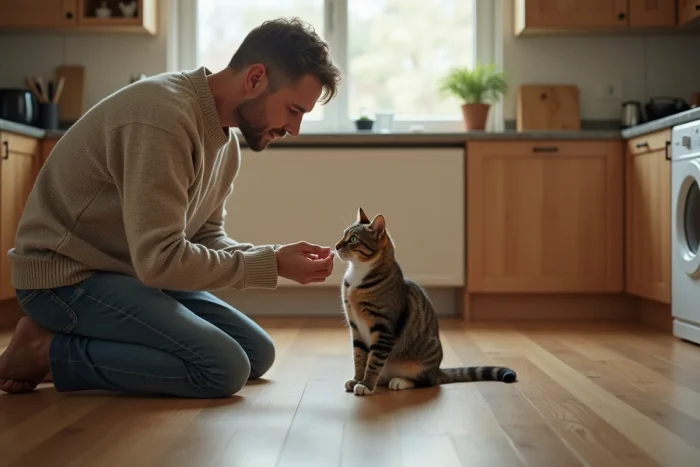
Administration is done orally, with or without food. The pork liver flavor facilitates ingestion, but some cats refuse the whole tablet. Hiding it in a ball of wet food remains the most reliable method.
Cases of cats with renal insufficiency
Amoxicillin is primarily eliminated through the kidneys. In a cat with impaired renal function, the clearance of the medication decreases and the risk of toxicity increases. A prior renal assessment is necessary for elderly or polyuric cats.
The veterinarian may then space out doses or reduce the amount. We recommend never adjusting the dosage without veterinary advice, even if the cat seems to be “doing better” after a few days.
Obese cats: a common pitfall
Calculating the dose based on the total weight of an obese cat leads to overdosing. The estimated ideal weight, not the actual weight, should serve as the basis for calculation. This point is often underestimated in everyday practice.
Duration of antibiotic treatment: why “finishing the box” is no longer enough
The classic rule (“always finish the prescribed antibiotic”) is under revision. Recent opinions from the EMA on veterinary antibiotics advocate for a minimum effective duration: adapting the treatment duration to the actual clinical response, not to a prescription habit of ten to fourteen days.
In practical terms, this means that a veterinarian may decide to stop Clavaseptin as soon as clinical signs disappear, without waiting for the theoretical end of the initial protocol. This approach aims to limit the selection pressure on resistant bacteria.
Stopping too early on one’s own initiative remains a mistake. The nuance lies in veterinary follow-up: it is the practitioner who evaluates clinical recovery, not the owner. Interrupting treatment because the cat “seems cured” promotes relapse and the selection of resistant strains.
Side effects of Clavaseptin and drug interactions in cats
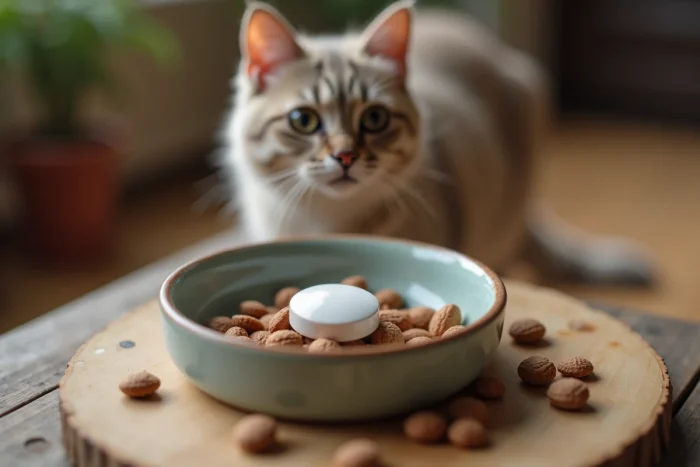
The most common adverse reactions are digestive: vomiting, diarrhea, transient loss of appetite. These side effects mainly occur at the beginning of treatment and are generally mild.
- Vomiting often occurs within an hour after administration. Giving the tablet with a little food reduces this risk.
- Soft diarrhea may persist for several days. If it becomes watery or contains blood, contact the veterinarian immediately.
- Allergic reactions (facial swelling, hives, breathing difficulties) are rare but constitute an absolute emergency.
Formal contraindications
Clavaseptin is contraindicated in cats allergic to penicillins or cephalosporins. A cross-allergy between these two classes of antibiotics exists. Any history of reaction to a beta-lactam must be reported to the veterinarian before prescription.
Use in rabbits, hamsters, guinea pigs, and gerbils is also contraindicated due to the risk of fatal digestive dysbiosis.
Interactions to monitor
The combination with certain other antibiotics (notably bacteriostatic ones like chloramphenicol or tetracyclines) can reduce the effectiveness of Clavaseptin. Any concomitant treatment must be reported to the veterinarian, including dietary supplements.
Antibiotic resistance and owner responsibility
Antibiotic resistance is not an abstract concept in feline veterinary medicine. Protected penicillins like Clavaseptin are among the most prescribed antibiotics for cats. Every inappropriate use (miscalculated dose, treatment too short or too long, prescription without bacteriological diagnosis) contributes to making these molecules less effective for all animals.
The owner has a direct role in this chain. Adhering to the dosage, not reusing leftover tablets for another infectious episode, and reporting any adverse effects to the veterinarian are simple actions that help preserve the available antibiotic arsenal.
- Never give Clavaseptin without a valid veterinary prescription.
- Do not share treatment between two animals, even of similar weight.
- Return unused tablets to the pharmacy for disposal.
The reasoned prescription of Clavaseptin in cats is based on an accurate diagnosis, close clinical monitoring, and a treatment duration adapted to each situation. Keeping an antibiotic effective in the long term requires this rigor with every prescription.