
Launching a new product, deploying management software, reorganizing a warehouse: these three initiatives fall under project management, but none are managed in the same way. The scope, the skills involved, and the monitoring methods vary depending on the nature of the project. Understanding these differences allows for choosing the right approach from the start, rather than correcting course along the way.
Product project or infrastructure project: two management logics
Take a company launching a mobile application. The team works in short iterations, adjusts features based on user feedback, and the product does not have a fixed end date. This type of initiative, sometimes called product project, is organized around a backlog and an evolving roadmap.
In contrast, the construction of a logistics warehouse follows a linear sequence: studies, permits, construction, delivery. The scope is locked, the budget is set, and the end date is contractual. Changing the plan during the project is costly.
The Product Development & Management Association (PDMA) notes in its 2024 report that the boundary between project and product is blurring in digital companies. Projects serve as funding and governance envelopes, while the product roadmap structures daily work. To delve deeper into this distinction, the types of projects on Le Guide PME detail the main categories and their classification criteria.
Why does this distinction matter? Because a project manager applying rigid planning to a digital product slows down the team. And one managing a construction project in agile mode risks uncontrolled cost overruns.
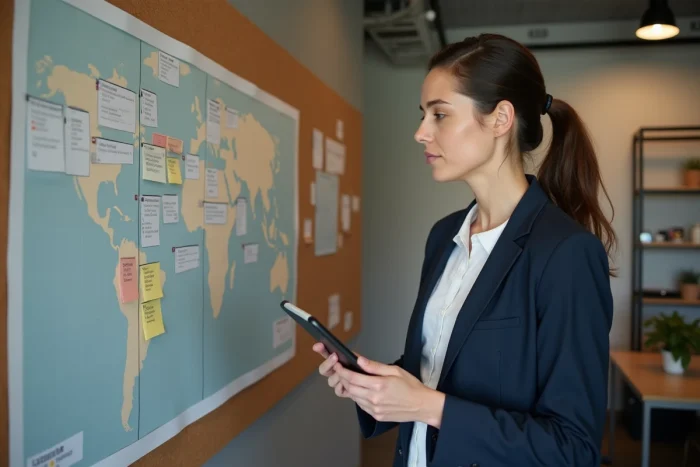
Transformation, efficiency, and sustainability projects in business
Beyond the industry sector, companies often classify their projects by purpose. Three categories frequently emerge.
Operational efficiency projects
Automating order entry, reducing delivery times, ensuring reliable reporting: these projects aim to improve an existing process without changing the business model. They are often short, with a measurable return on investment. The main challenge is to precisely define the scope to avoid the “while we’re at it” effect.
Transformation projects
Here, the company changes direction. Migration to a new ERP, complete redesign of the customer journey, merger of two entities. The budget is heavier, the teams are larger, and change management weighs as much as the technical aspects.
A poorly supported transformation project rarely fails for technological reasons. The blockage almost always comes from organizational resistance. Hence the importance of involving middle managers from the planning phase.
Sustainability and ESG projects
The European CSRD directive, gradually coming into effect from the 2024 fiscal year for large companies, has given rise to a cross-cutting category. These projects cover the collection of non-financial data, reduction of emissions, or alignment with the European taxonomy.
Their uniqueness: they affect all departments simultaneously (finance, production, purchasing, HR) and require dedicated ESG reporting tools that traditional project management software does not always cover.
Choosing the management method suited to the type of project
You may have noticed that sometimes a spreadsheet is enough, while another project requires a complete management tool with Gantt charts and dashboards? The choice of method directly depends on the type of project identified.
- An infrastructure project or one with a fixed scope relies on a sequential (waterfall) approach: each phase starts when the previous one is validated. The initial planning is detailed, and the milestones are contractual.
- A digital product or innovation project works better in agile mode (Scrum, Kanban). Deliverables evolve with each sprint, and the team continuously adjusts its priorities through the backlog.
- A transformation project often combines both: a sequential structure for overall governance, and agile batches for technical developments or user testing.
A common pitfall is to impose an agile method on a highly regulated project, or conversely, to apply a V-cycle to a software development team. The method must serve the project, not the other way around.
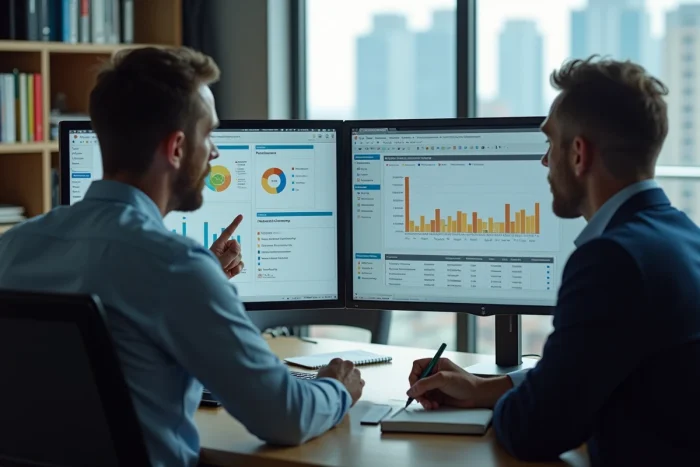
Project management tools and governance: what changes with size
A project led by three people over two months does not require the same setup as a program involving several dozen collaborators over a year.
For small-scale projects, a task management tool with lists and deadlines is sufficient. The team coordinates during weekly meetings. Reporting fits on one page.
As soon as the project grows, the question of governance arises. Who arbitrates priorities between teams? How to consolidate the progress of several batches? PPM (Project Portfolio Management) type tools then allow for managing a portfolio of projects, with performance dashboards and aggregated indicators.
- Small scope projects benefit from staying light: a shared Kanban and regular synchronization meetings.
- Medium projects require a formalized project plan, budget tracking, and a monthly steering committee.
- Transformation programs require a dedicated structure (PMO), multi-level reporting, and portfolio planning and tracking tools.
Overburdening the governance of a small project kills the team’s velocity. Conversely, managing a complex program without a clear decision-making structure leads to late arbitrations and budget overruns. The right calibration is decided before launch, not after the first deviations.