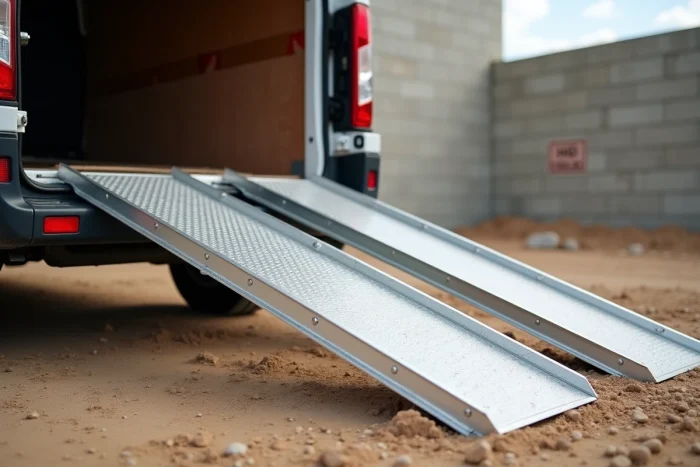
An aluminum loading ramp is a mobile inclined plane that allows heavy loads to be raised or lowered between the ground and a vehicle platform, a trailer, or a dock. On a construction site, it is mainly used for transferring mini-excavators, loaded wheelbarrows, pallet jacks, or packaged materials on pallets. The choice of material and sizing determines both the safety of operators and the lifespan of the equipment.
Regulatory compliance and insurance coverage on site
Since 2023-2024, several insurers and SPS coordinators require that ramps used on construction sites comply with the EN 1398 standard or have a manufacturer’s resistance certificate. Without this document, certain incidents related to loading operations are no longer covered.
This traceability requirement changes the game for artisans and small businesses. Buying a ramp without technical documentation exposes one to a denial of compensation in case of an accident. Ramps sold in DIY stores, including Brico Dépôt, increasingly meet this requirement by providing detailed instructions and a verifiable CE marking.
The ED 945 sheet from INRS, updated in 2023, reminds employers of their obligations during loading and unloading operations. Having a ramp with the maximum capacity clearly indicated by the manufacturer is a prerequisite for complying with these recommendations. By choosing the aluminum loading ramp from Brico Dépôt, professionals gain access to equipment accompanied by this documentation, at a price compatible with construction budgets.
Aluminum vs. steel: weight, strain, and field durability
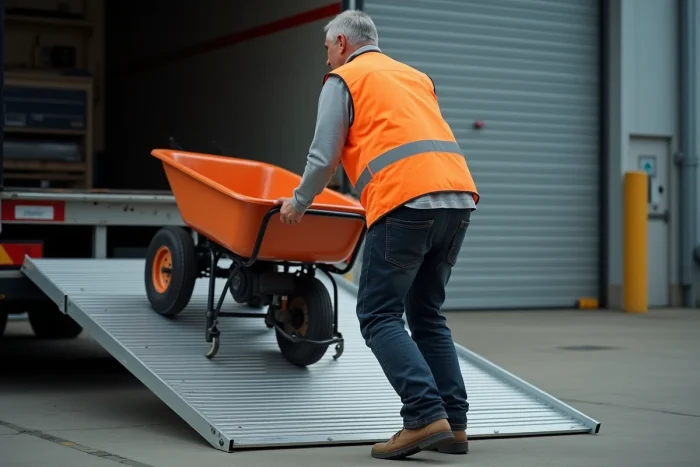
Aluminum weighs about three times less than steel at equivalent volume. On a construction site where the ramp must be moved several times a day, transported in a utility vehicle, and then repositioned by hand, this difference in mass is significant.
Large construction groups like Vinci or Eiffage explicitly mention lightweight handling equipment in their strain reduction policies. The goal is to limit musculoskeletal disorders (MSDs) related to repetitive manual handling. An aluminum ramp that two operators can lift without straining reduces the risk of lower back pain compared to a steel model that requires four people or a lifting machine.
Corrosion resistance in construction conditions
Untreated steel rusts upon contact with water, mud, and cement splashes. Galvanized steel resists better, but the coating wears off with repeated passes of tracked machines or metal wheels.
Aluminum does not rust. It naturally forms a protective oxide layer that regenerates after abrasion. On a site exposed to the elements, this results in reduced maintenance and a longer lifespan without periodic surface treatment.
Sizing an aluminum ramp: length, width, and slope
Three technical parameters determine whether a ramp is suitable for a given use. Neglecting them compromises the stability of the machine during ascent.
- Usable length: this defines the slope. The longer the ramp for a given loading height, the gentler the slope and the safer the ascent. For a standard trailer, a slope of less than 20% is recommended for tracked machines.
- Width: it must exceed the widest track of the machine to be loaded. Allowing a margin on each side prevents a track or tire from slipping off the load-bearing surface.
- Load capacity: the maximum allowable load must cover the total weight of the heaviest machine expected, including its accessories (bucket, arm). This information is usually found in the manufacturer’s instructions and on the ramp itself.
Poor sizing cannot be corrected on site. A ramp that is too short creates an excessive slope that stresses the machine’s transmission and increases the risk of rear tipping.
Anti-slip surface and integrated safety devices
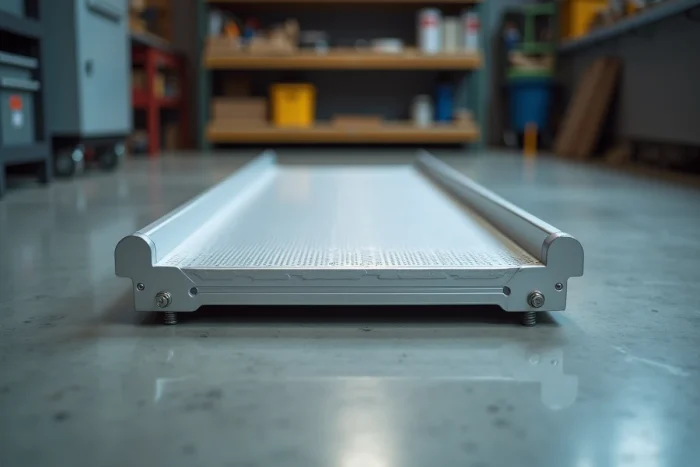
The profile of the running surface distinguishes a professional ramp from a simple inclined plane. Aluminum ramps intended for construction sites generally use a reinforced sheet or chevron profile that maintains grip even when the surface is wet or muddy.
Two safety elements deserve systematic checking before each use:
- Side edges (or curbs) prevent lateral displacement of wheels or tracks. Their height must be sufficient to guide the machine without allowing it to cross over.
- The attachment system to the vehicle (hook, support leg, or notch) ensures that the ramp does not slip under the load during ascent. A poorly positioned attachment is the leading cause of ramp falls reported in construction accident reports.
Routine maintenance of an aluminum ramp
Maintenance consists of a water jet cleaning to remove mud and gravel stuck in the anti-slip reliefs, followed by a visual inspection of the attachment points and welds. A well-maintained aluminum ramp retains its mechanical properties for many years, without requiring anti-corrosion paint or surface treatment.
Storing it away from direct impacts prolongs its lifespan. Aluminum resists moisture, but mechanical deformation (falling heavy objects, crushing by machinery) can compromise load capacity without immediate visible signs. Any deformed ramp must be taken out of service.
The choice of an aluminum loading ramp for a construction site is based on a trade-off between lightness, corrosion resistance, and documentary compliance. The increasing demands of insurers and SPS coordinators make equipment traceability as crucial as its mechanical performance. Checking the load capacity, the length relative to the loading height, and the condition of the attachment system before each use remains the most effective preventive measure.