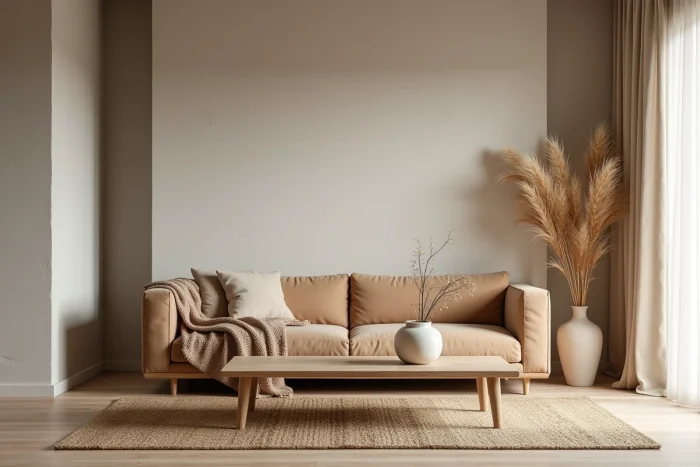
Interior decoration is defined by the choices of materials, colors, and furniture that structure a living space. This year, these choices are leaning towards specific directions: enveloping shades, raw materials designed to last, and furniture whose design incorporates reparability from the outset. Three axes that redefine the way we think about interiors.
Detachable and Repairable Furniture: The Decor Criterion Not Yet Shown in Catalogs
A piece of furniture designed to be disassembled, repaired, or reconfigured changes the relationship with interior furniture. Visible screws, standardized parts, and interchangeable modules are no longer aesthetic compromises. They become deliberate design choices.
ADEME has integrated this logic into its recommendations for sustainable furnishing published in 2024. The Maison&Objet fair, during its January 2025 edition, highlighted creators who think of design for reparability as a formal vocabulary in its own right.
Concretely, this translates into shelves where each shelf can be individually replaced, sofas whose wooden structure is revealed instead of hidden, or light fixtures where each component can be ordered separately. Exploring decor trends on Murmures Déco allows you to spot pieces that adhere to this logic without sacrificing aesthetics.
The European Regulation on the ecodesign of sustainable products (ESPR), adopted by the European Parliament in April 2024, will gradually impose sustainability requirements on furniture. French furniture federations anticipate the emergence of digital product passports and environmental impact sheets aimed at the general public by 2026. Choosing a repairable piece of furniture now means buying an item that will remain compliant with future standards.
Trendy Interior Colors: Deep Teal and Earthy Tones
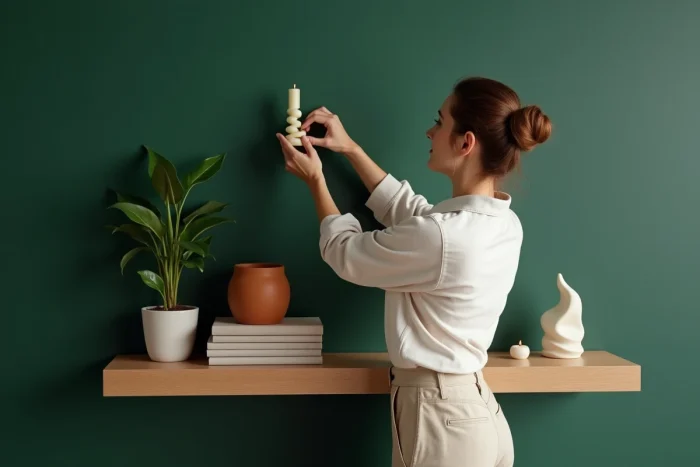
This year’s palettes are divided into two distinct families. The first revolves around Transformative Teal, a deep teal designated as the color of the year by WGSN and Coloro. Neither cold nor saturated, this hue works well as wall paint and in upholstery textiles.
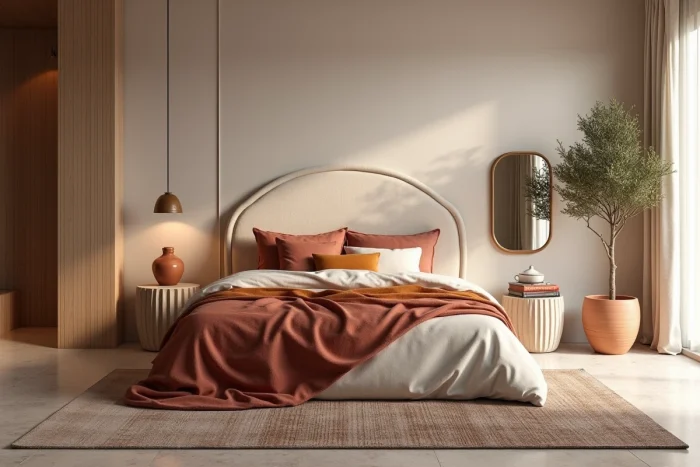
The second family gathers earthy tones: muted ochres, terracottas, warm browns. These colors evoke the tones of the 70s without reproducing their excesses. They naturally pair with wood and stone, two materials that are omnipresent in current interiors.
How to Combine These Two Palettes in the Same Space
Applying deep teal to a single wall and then dressing the rest of the room with earthy tones creates a contrast that structures the space without fragmenting it. Dark wood furniture serves as a visual bridge between the two color families.
- Accent wall in Transformative Teal paired with an ecru linen sofa to balance the depth of the color
- Cushions and throws in ochre or terracotta tones to warm up the whole without adding extra color
- Amber glass light fixtures that filter light and extend the warm palette into the lighting
Limiting the palette to a maximum of three tones per room remains the most reliable rule to avoid visual cacophony.
Natural Materials and Textures in Interior Decoration
Wood, linen, stone, and artisanal ceramics dominate material choices. What changes this year is the way they are combined. Interiors mix matte surfaces and slightly shiny finishes within the same room, creating what some designers call a textured layering.
Artisanal ceramics illustrate this evolution well. Rather than smooth, uniform tiles, irregular finishes and reactive glazes bring a visible texture that captures light differently depending on the time of day. These pieces work equally well as kitchen backsplashes or decorative objects placed on a shelf.
Faux fur is making a comeback in relaxation spaces. Throws and seating covered in dense, fluffy textures respond to a demand for sensory comfort. The approach remains ethical: next-generation synthetic materials mimic the touch without resorting to animal fibers.
Organic Shapes and Sculptural Furniture: What Style of Furniture to Choose
Straight lines and sharp angles are giving way to rounded shapes and asymmetrical curves. Tables with curved edges, armchairs with enveloping backs, mirrors with irregular contours: sculptural furniture transforms each piece into an expressive object.
This trend is not limited to small decorative pieces. Light fixtures adopt generous, sometimes oversized proportions that redefine the visual balance of a room. A large pendant light above a coffee table is enough to anchor the decor of a living room.
Avoiding the All-Curve Trap
An interior composed solely of organic shapes loses readability. Keeping at least one straight element per space (a bookshelf, a frame, a TV stand) creates the necessary contrast for the curves to maintain their impact.
- Pair a rounded sofa with a rectangular dark wood coffee table to create controlled visual tension
- Choose an organic mirror facing a right-angled window; the contrast amplifies natural light
- Place a sculptural light fixture above a simple piece of furniture to focus attention on a single strong piece
One sculptural piece of furniture per room is enough to set the tone. Beyond that, the effect cancels out, and the space becomes confusing.
This year’s decoration trends share a common thread: the sustainability of materials, the coherence of palettes, and the sobriety of the decorative gesture. A successful interior does not accumulate all the trends. It chooses two or three, applies them rigorously, and allows the space around to breathe.