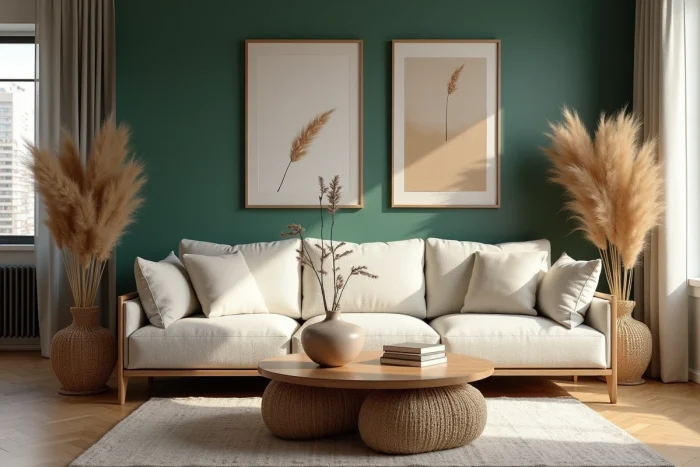
The decoration trends of 2026 mark a shift towards more expressive and sensory interiors. The subdued palettes and neutral atmospheres that have dominated in recent years are giving way to bolder choices, both in colors and materials. This movement, visible in both trade shows and the collections of publishers, raises a fundamental question: which innovations will truly transition from magazine to living room?
Raw materials and bold textures: what’s changing in interiors in 2026
The most significant turning point this year concerns not colors, but surfaces. Handmade ceramics, blown glass, and visibly grained woods are taking an increasingly prominent place in furniture and decorative object collections. These are no longer just occasional accents but structural choices, used on key pieces like coffee tables, lighting fixtures, or wall coverings.
This orientation towards visible and embraced raw materials responds to a need for uniqueness. A table top made of irregular ceramic or a bubbled glass vase tells a story of craftsmanship, where a smooth and uniform surface remains silent. Field reports diverge on this point: these pieces are appealing in showrooms, but their maintenance in daily life sometimes hinders adoption in homes with children or small spaces.
Chrome finishes, absent for several years, are making a comeback. Furniture legs, handles, lighting fixtures: chrome returns in touches, contrasting with organic materials. The combination of cold metal and natural texture creates a visual tension that defines a significant part of current interior design.
For those who wish to discover the new offerings on Kabanes, the online selection reflects this shift towards pieces with strong material personality.

Trendy colors for decor 2026: from mocha to burgundy, a gourmet palette
The Mocha Mousse, designated color of the year, sets the tone. This warm brown, halfway between milk chocolate and caramel, settles on walls as well as textiles. It works as a flat color in a bedroom or living room, but also in combination with off-whites to avoid a cave-like effect.
Burgundy makes a strong return in wall decoration and furniture. Armchairs, cushions, curtains: this deep shade brings an intensity that beiges and grays do not produce. The available data does not yet allow for measuring whether this color will establish itself durably or if it is merely a seasonal peak, but its presence in the spring-summer 2026 collections is massive.
Purple and lilac complete this palette. Less expected, they bring an unexpected touch of elegance, especially in spaces like the bathroom or office. Their use remains more timid in France than in Scandinavian countries, where saturated colors are adopted more easily.
- Mocha Mousse: color of the year, ideal as a flat color or in combination with neutral tones for the living room and bedroom
- Burgundy: powerful return in textiles and furniture, it warms up atmospheres without weighing them down
- Lilac and purple: more discreet touches, effective in secondary rooms or as decorative accessories (vases, cushions, paintings)
- Reworked beige: still present but offered in more textured versions, far from the flat beige of previous years
Revisited retro style: why vintage no longer copies the old
The return of retro in decor 2026 does not replicate an old style identically. Inspirations borrow from the design of the 1970s and 1980s, particularly rounded shapes and warm colors, but integrate them into contemporary lines. A sofa with Seventies curves will be offered in a washable technical fabric. A Memphis-inspired lamp will adopt LEDs and a dimmer.

This hybridization between vintage references and modern functionalities distinguishes the current trend from a simple nostalgic revival. The Memphis style, in particular, is making a comeback with its bold geometries and bright color combinations, but in proportions adapted to current interiors, often more compact.
Scandinavian furniture, on the other hand, is not disappearing. The coffee table with clean lines continues to appeal, but it now coexists with more sculptural pieces. The monochrome and minimalist ambiance is receding in favor of bold mixes. A living room can combine a mid-century style sofa, a Berber rug, and an abstract painting without the whole seeming incoherent, as long as the palette remains controlled.
Decor inspiration and real usage: the gap that magazines do not show
Decor trend articles, including those from major online publishers, remain very focused on visual effect. Staged photos show perfectly composed spaces, rarely inhabited. This editorial approach creates a gap with the constraints of real usage: maintenance of natural materials, durability of furniture in homes with children, compatibility of dark colors with small, poorly lit spaces.
A burgundy wall in a well-lit thirty-square-meter living room produces a warm effect. The same burgundy in a twelve-square-meter north-facing room can darken the space to the point of making it uncomfortable. The size and brightness of the room condition the final result much more than the choice of color.
Similarly, chrome finishes and blown glass surfaces require regular maintenance to maintain their shine. Families or individuals who prioritize practicality benefit from testing these materials on accessories (vase, lamp, tray) before adopting them on main furniture.
- Test a strong color on a single wall or an accent piece before repainting an entire room
- Check the compatibility of raw materials (ceramics, untreated wood) with the daily uses of the household
- Favor hybrid pieces (retro style, contemporary materials) to reconcile aesthetics and durability
The distinction between editorial trend and actual adoption in stores remains blurred. Many new decor items are appealing in photos but struggle to settle into everyday interiors. A durable decor purchase is judged as much on visual pleasure as on the piece’s ability to age in a lived space, with its constraints of light, space, and maintenance.