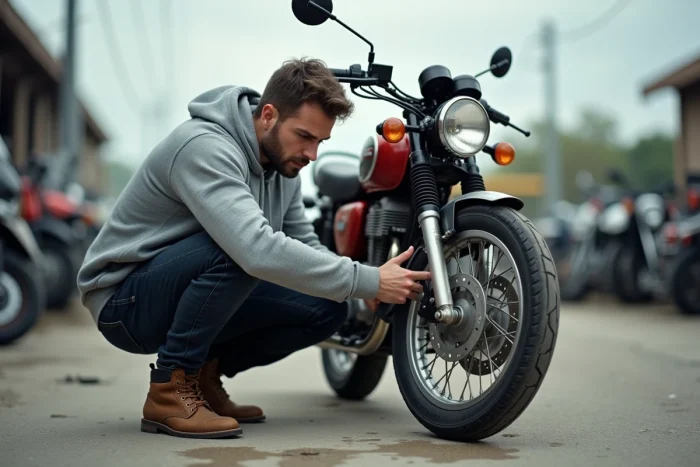
Buying a used motorcycle on a tight budget means making precise choices. At this price level, the market offers a wide variety of machines, from tired Japanese trails to well-maintained roadsters. The challenge is not finding an ad, but distinguishing a good deal from a financial pitfall.
The motorcycle technical inspection changes the game for budget-friendly used bikes
Since the implementation of the motorcycle technical inspection in France starting in April 2024, machines with critical defects (braking, structure, pollution) are more easily identified before resale. For a budget-conscious buyer, this is an added layer of protection.
Before this date, a seller could offload a motorcycle with worn brakes or a weakened frame without any obligation for mechanical transparency. Today, the technical inspection report highlights major defects and re-inspections are common for older machines in the low-end market.
In practice, always ask for this document. If it’s missing, ask yourself: why hasn’t the seller had it done? A refusal or evasion on this point is a serious warning signal. To choose a used motorcycle for 2000 euros, this document has become the first filter for selection.
Used motorcycle budget: the purchase price doesn’t tell the whole story
You find an ad for 1,800 euros for a roadster with reasonable mileage. Good deal? Not necessarily. The true cost of a used motorcycle is calculated over two to three years of use, not just on the displayed price.
Motorcycle insurance and safety gear
Insurers are increasingly factoring in the presence of an approved SRA anti-theft device, ABS, and electronic aids in calculating the premium. A slightly more expensive motorcycle equipped with ABS may end up being cheaper to use than a model lacking these features.
Also consider the rider’s gear. Helmet, approved gloves, jacket, boots: this item represents a significant budget. If you buy the motorcycle for exactly 2,000 euros and still need all the gear, the real budget skyrockets.
Regular maintenance and wear parts
Some models have inexpensive and widely available wear parts. Others require specific orders with long lead times. Before falling for a model that visually appeals to you, check the price of a chain kit, a set of brake pads, and a rear tire for that specific machine.
- A chain-sprocket kit for a common Japanese trail costs significantly less than a kit for a rare European model.
- Standard size tires (120/70 and 160/60 for example) are easily found and reasonably priced, unlike rare sizes.
- The availability of oil filters and spark plugs in a regular motorcycle shop avoids online orders and weeks of waiting.
Favor widely distributed Japanese models (Yamaha, Honda, Kawasaki, Suzuki): the parts network is dense and prices remain accessible.
Actual condition of the motorcycle: three points that ads don’t show
Competitors often detail a list of ten points to check. Three deserve special attention because they are rarely visible in ad photos and can turn a purchase into a mechanical nightmare.
Steering head bearings
Stand in front of the motorcycle, lift the front wheel if possible, or roll it slowly with the handlebars turned. Do you feel a hard spot, a notch in the center of the handlebars? The steering bearings are damaged. This repair requires specific tools and skilled labor. A notch in the center of the handlebars means an expensive replacement.
Timing chain or cam noise
Start the engine cold, without letting it warm up first. A regular metallic ticking at idle, especially in the first few seconds, may indicate a worn timing chain tensioner or cam wear. When hot, this noise often diminishes, masking the problem.
Discreet signs of a fall
The handlebar ends, footpegs, and left side engine cover are the first elements to touch the ground in the event of a fall. Deep scratches on these parts indicate an impact. Also check the alignment of the handlebars with respect to the front wheel: even a slight misalignment reveals a shock to the front end.
Scams on low-priced motorcycle ads: concrete signals
General ad platforms have strengthened their fraud detection systems since 2024, with automated analysis of duplicates and inconsistencies between registration documents and descriptions. Despite this, scams still exist at this price level.
Have you spotted an ad that seems too good to be true? Apply this quick filter:
- The seller refuses a physical meeting or only offers shipping after payment: this is the classic scheme of a fake transporter.
- The VIN number on the frame (right side, near the steering head) does not match the registration certificate: walk away without hesitation.
- The ad uses overly perfect photos, with no identifiable background, or the same images appear on other ads: a sign of stolen photos.
- The price is abnormally low compared to the market for the same model and mileage: a difference of more than 20% below the market value should raise a red flag.
Insist on seeing the motorcycle in person, starting it yourself, and comparing the frame’s VIN with that of the registration document. These three actions eliminate the vast majority of fraud attempts.
The used motorcycle market on a budget remains accessible as long as you don’t rush. A valid technical inspection, a calculation of the real cost over two years, and a targeted inspection of discreet mechanical points make the difference between a controlled purchase and a source of regrets.